

The 2023 FIFA Women’s World Cup hosts will be decided today by FIFA’s Council, with two bids – one from Columbia and a joint proposal from Australia and New Zealand, the last two remaining bids in the process. To celebrate this moment, we’ll take a look back at the previous FIFA Women’s World Cups – including moments of inspiration, controversy and the struggle for acceptance on a world-stage.
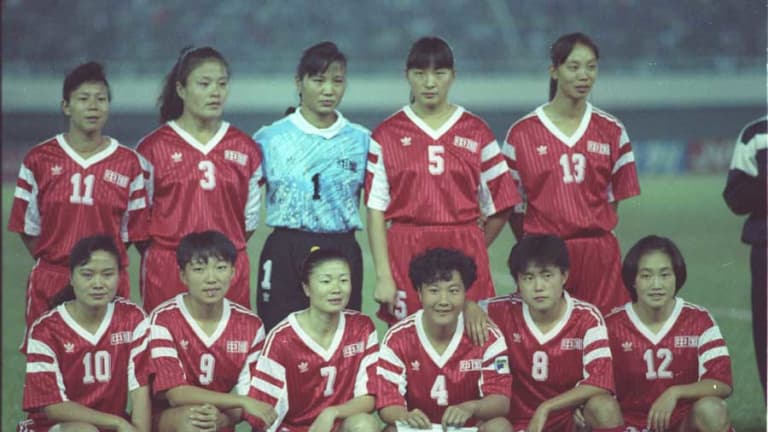
The Women’s World Cup is, in comparison to its male counterpart, a competition that is still in its infancy. For many years, Women’s football had been side-lined, with rules and regulations preventing the growth of the Women’s game. It therefore comes as no surprise that the first Women’s World Cup in 1991 was met with suspicion. Consider for instance, that the first ‘World Cup’ did not bear the weight of such a title. Rather, the tournament’s name became an uncomfortable clash between an attempt to honour Women’s football and a nod to what was deemed important – sponsorship and revenue. The official tournament name ‘First FIFA World Championship for Women’s Football for the M&Ms Cup’ was a clear indication that to many, Women’s football did not have the clout or identity to stand on its own. Despite this, the tournament proved popular, with a total attendance of ‘500,000’, suggesting that a platform for International Women’s football was indeed feasible.
The growth of the women’s game became more apparent as the World Cup began to grow its own identity. Sweden hosted the second tournament in 1995, with the official ‘World Cup’ title now bestowed on the women’s game. Despite its transportation difficulties, the average attendance per match stood at around ‘4,316’. By the time the USA hosted the 1999 and 2003 World Cup, women’s football was becoming ever more prominent in media outlets, with research suggesting that over ‘40 million U.S. citizens watched the final match between the United States and China’. The introduction of televised games brought a new audience to women’s football, allowing young girls to make a tangible link between their own footballing interests, and those of an international athlete for the first time. This connection between female footballer’s and a younger generation would ultimately pave the way for further investment and development in the Women’s game.
CONTROVERSY
However, sport is not without its set of challenges and female sport in particular brings its own unique difficulties. At the 2007 World Cup, the increase in attendance and viewing figures brought a new media intensity to the game, and with it player’s behaviour and performances were subjected to a level of scrutiny unfamiliar in the women’s game. Take for instance, the controversy surrounding the USA team. Hope Solo, 26-years-old at the time, saw herself benched against Brazil in the semi-final, despite playing every game in the build-up. She was replaced by veteran goalkeeper Briana Scurry with the USA team going on to lose the game 4-0. However, it was not the loss that became the premise of a story, rather Hope’s public comments about the coach’s decision to bench her attracted unwanted attention:
“It was the wrong decision, and I think anybody that knows anything about the game knows that. There’s no doubt in my mind I would have made those saves. … You have to live in the present. And you can’t live by big names. You can’t live in the past.” – Hope Solo
Hope’s comments were viewed as divisive by her USA teammates, and the new-found media attention only added to the backlash. Once her comments were broadcast for all to see, she was painted as arrogant, over-confident and subsequently suspended from the team. Clearly, the increase in the scrutiny of the women’s game meant that moments of passion could be taken out of context and amplified, creating entertainment for the new, global audience.
The Women’s World Cup continued its upward trajectory with viewing figure records continuing to be broken and emotional ties beginning to be forged between the sides and their nation back home. Soon, countries became aware of the power of the women’s game in inspiring the next generation. Following Canada’s successful bid for the 2015 World Cup, Victor Montagliani, Chair of the National Organising Committee for the FIFA Women’s World Cup Canada 2015 and President of the Canadian Soccer Association, claimed that advertising and initiatives, such as the distribution of celebratory coins from the Canadian Royal Mint would, “Help inspire a whole new generation of girls and women to get involved in the game”. Yet, ‘good’ intentions can often be undermined by decisions that are inherently bias, and a particular incident in the build-up to the World Cup in Canada caused the hype around the advancement of women’s football to recede, with people realising that there was still a lot more to be done. For instance, the decision for all the 2015 Women’s World Cup games to be played on AstroTurf as opposed to authentic, grass pitches caused an outcry amongst players and supporters alike. Not only do synthetic pitches such as AstroTurf increase the likelihood of injuries, the prospect of playing on a surface, other than grass, would never be considered for a Men’s World Cup. This feeling of frustration resulted in over fifty players from a range of international teams filing a lawsuit for ‘sexual discrimination’ against the Canadian Soccer Association (CSA). One of the players to protest, Abby Wamback, from the USA said:
“I am hopeful that the players’ willingness to contest the unequal playing fields – and the tremendous public support we received during the effort – marks the start of even greater activism to ensure fair treatment when it comes to women’s sports.”
Despite the lawsuit being dropped, the action undertaken by players, coupled with public support ensured that the use of AstroTurf pitches was made redundant and no longer a viable option for future World Cups.
LOOKING TO THE FUTURE
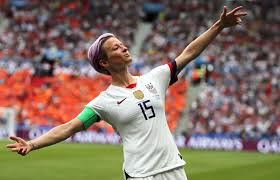
Arguably, the visibility of women’s football from its first World Cup to recent times has helped to build a strong brand. The quality on display has undoubtedly improved, with female footballer’s making the transition from amateur to professional; a move praised for increasing the standard of the game. You only have to look at the viewing figures from the recent 2019 World Cup held in France to see the progression. The World Cup Final in France was seen live by over 260 million viewers, with the: “Average live match audience more than doubling from 2015,” according to FIFA’s records. Statistically, it seems that the suspicion held over twenty-nine years ago as to whether female international football could be consumable to large audiences, was inherently flawed. Now, the heroics and despair of the Women’s World Cup are available for all to see and the media presence has created powerful female figures that not only inspire, but challenge. From Megan Rapinoe’s confidence, to the Brazilian Marta’s emotional plea for young girls to: “Cry in the beginning so you can smile in the end,” the increased coverage of the women’s game has allowed athletes to connect with audiences and help fuel interest in the women’s game.
Whether it’s Columbia or Australia and New Zealand who host the next FIFA Women’s World Cup, it will certainly be an opportunity for women’s football to inspire and break even more records.
 SPORT central